
Scan the short version

12 weeks
UX Researcher
UI Designer
Project Manager
Miro
Figma
Photoshop
Design Objectives
Design a digital solution to help office workers, who are aged 20 to 35 years old and have a fixed schedule at work, improve the overall experience of long-term exercise habit formation.
Challenges
Not a medical / health expert - Research depth not being deep due to lack of professional expertise in medical / health related fields.
Limited research data - Only conducted and received 5 qualitative research data with limited time and resources.
Multitasking - Responsible for project management, UX research, marketing analyze, and UI design for this project. Multitasking makes it hard to focus on each role’s task.
Process
The project was based on the LeanUX methodology. The process includes 5 sprints, and each sprint delivers different artefacts.
Understanding the people
30-minute semi-structured interviews was conducted with 26 open-ended questions to 5 participants. The participants are 25-35 years old office workers based in Taiwan, who are recruited from my friends and family members. There are the quotes from them:
“Help yourself find a sports place that suits you”
- by Participant 1, exercise once per week
“The biggest challenge I encounter is regular exercise. There are often external forces involved, such as having to work overtime suddenly or feeling unwell. This is very difficult in itself.”
- by Participant 2, exercise twice per week
“If you don’t have someone to exercise with you, it will be hard to exercise regularly and you will want to waste time.”
- by Participant 3, exercise twice a week
Findings and insights
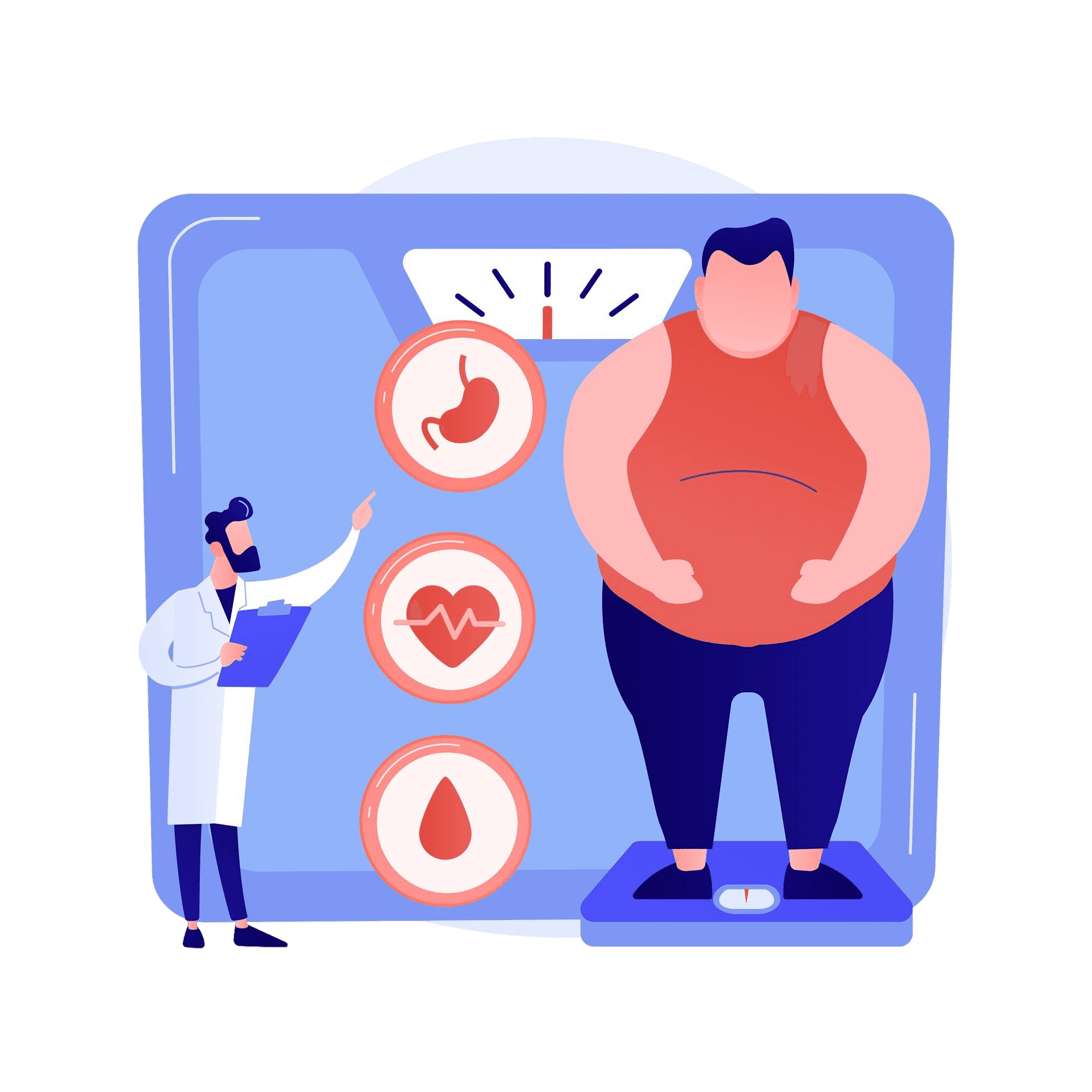
Motivation is originated from the self-awareness of their body and health conditions.

External supports from friends, family, and coaches can help develop a long-term exercise habit.

Suitable environment and workout locations let peoples want to go exercise automatically.
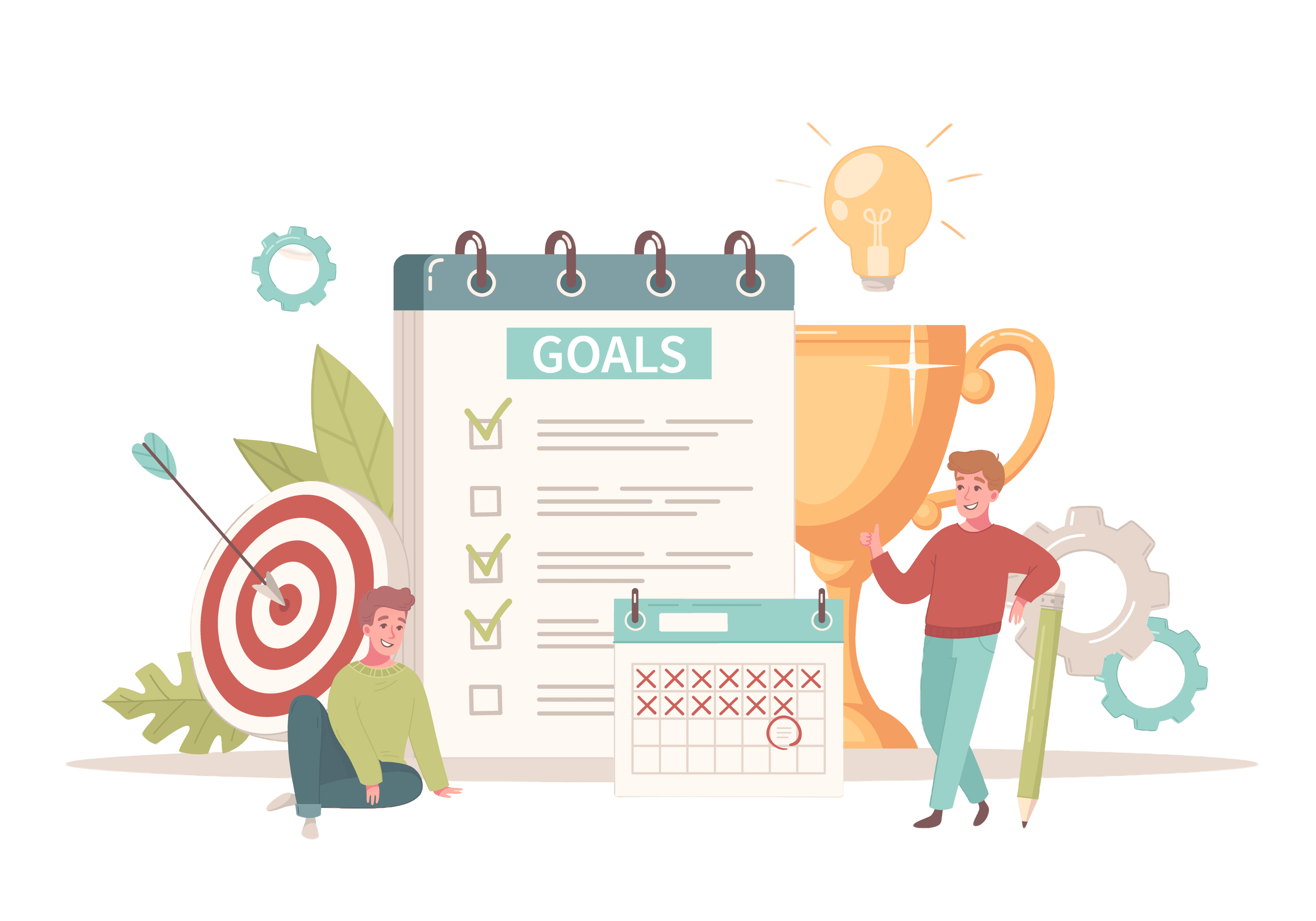
Peoples who have a regular exercise habit focus on setting up goals, planning, and managing their time.
Four main insights from the research
The Must-Have features
A tailored, customized workout plan and a gamified feedback design system, which are based on the two solutions: customizing an exercise plan based on lifestyle and emphasizing the short-term goals and benefits.
Must Have
Customized Plan
Gamified System feature
📋 🎮
The Should-Have feature
The Should-Have feature is an AI workout coach, which is based on the solution: Seeking a professional assistant from coaches. The feature can help users develop a long-term habit by providing healthy information and everyday guidance.
Should Have
AI Interactive Coach feature
🤖
The Nice-to-Have features
Community support feature, which is based on the solution: Finding an exercise model that is supported by family and friends. The feature invites users to join events, challenges, and clubs in society and motivate users to exercise.
Nice to Have
Community Support feature
🧑🤝🧑
User Testing
Improving the design for the real-world users
Usability Testing
The test has 2 phases: Before Exercise and After Exercise. Each phase has 3 tasks for the participants to complete.
Phase 1: Before Exercise
1.Complete the initial questionnaire and create your own customized exercise plan
2.Fill out the sports declaration and set your own sports goals
3.Use the sports map to find a suitable sports location
Phase 2: After Exercise
4.Choose to link up with your friends to complete a sports record, any sports method is not limited
5.Go to the Home page and redeem the new identity authentication, and check your after-exercise reward.
Go to the Coach page to see the AI suggestions and progress data on your previous exercise
I created the high-fi prototype focusing on adding the design style throughout the UI, using colors to emphasize the main point, and based on the feedback from user testing results.
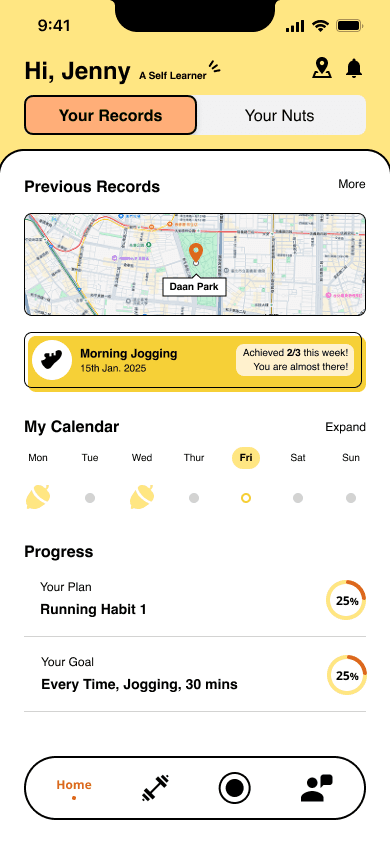
Home
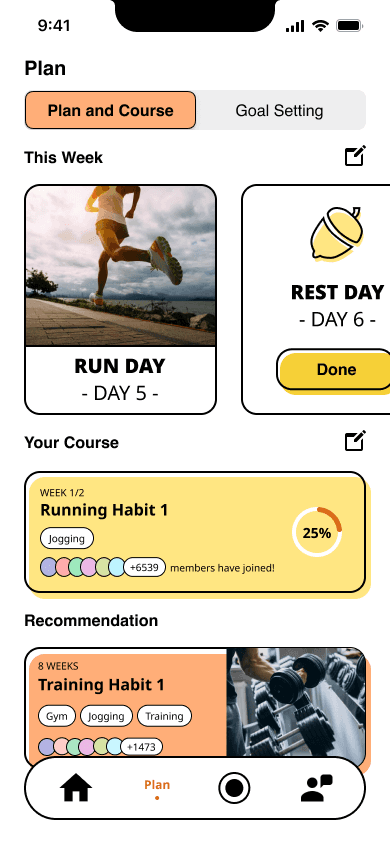
Plan
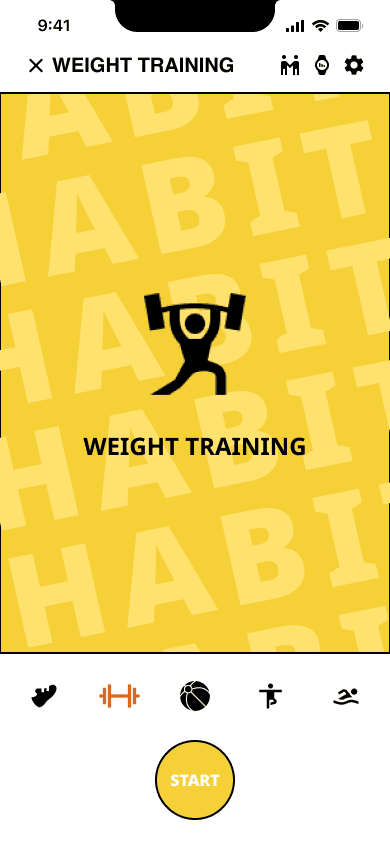
Record
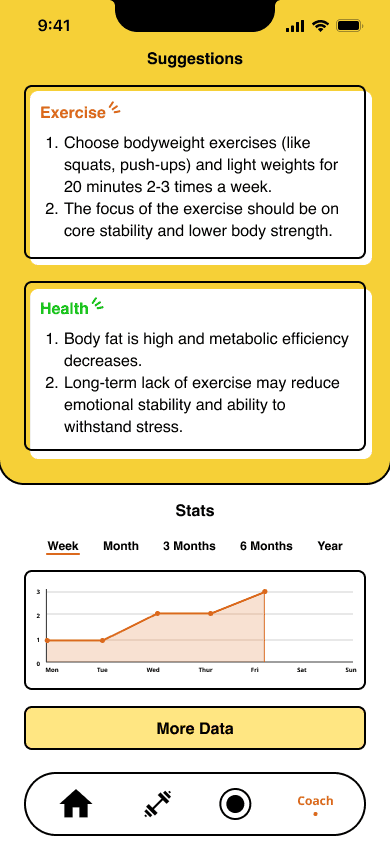
Coach
Final Outcome
Home
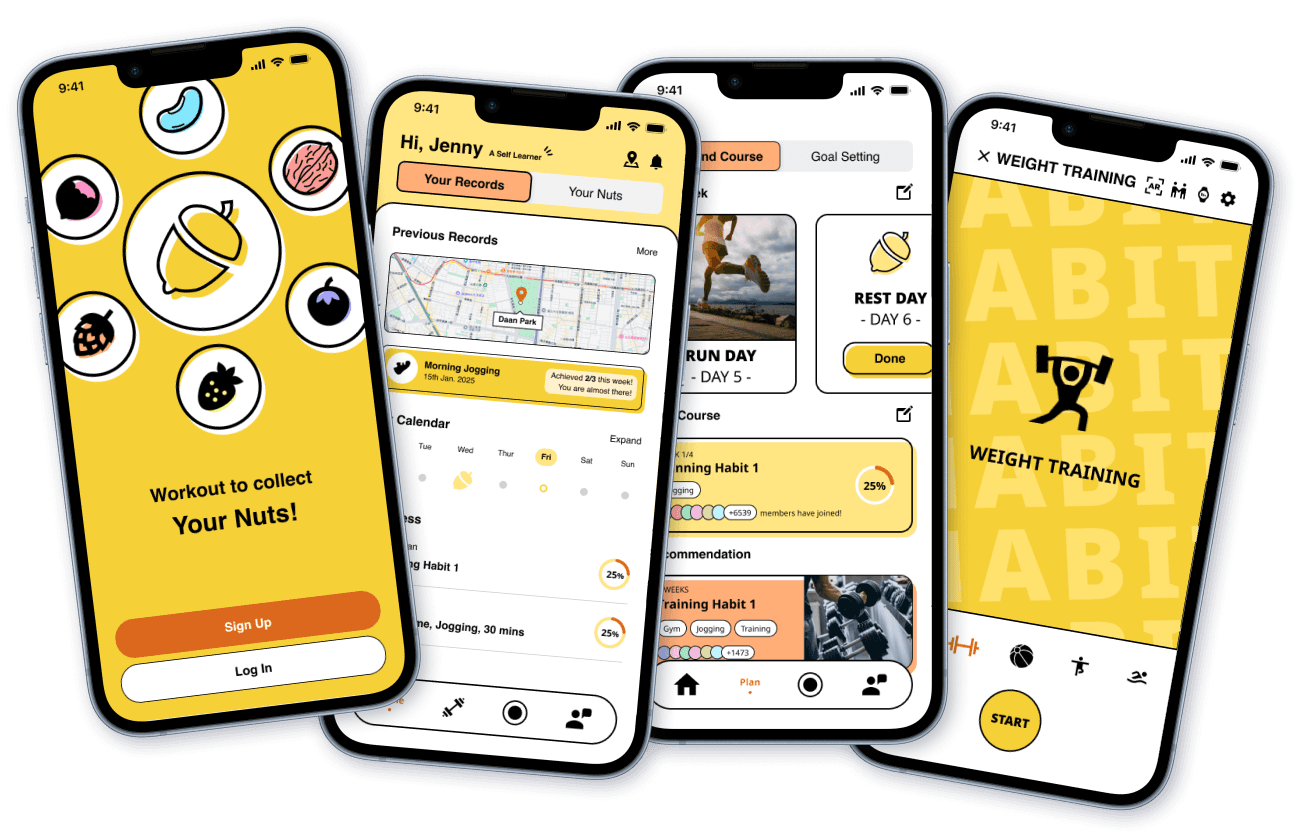
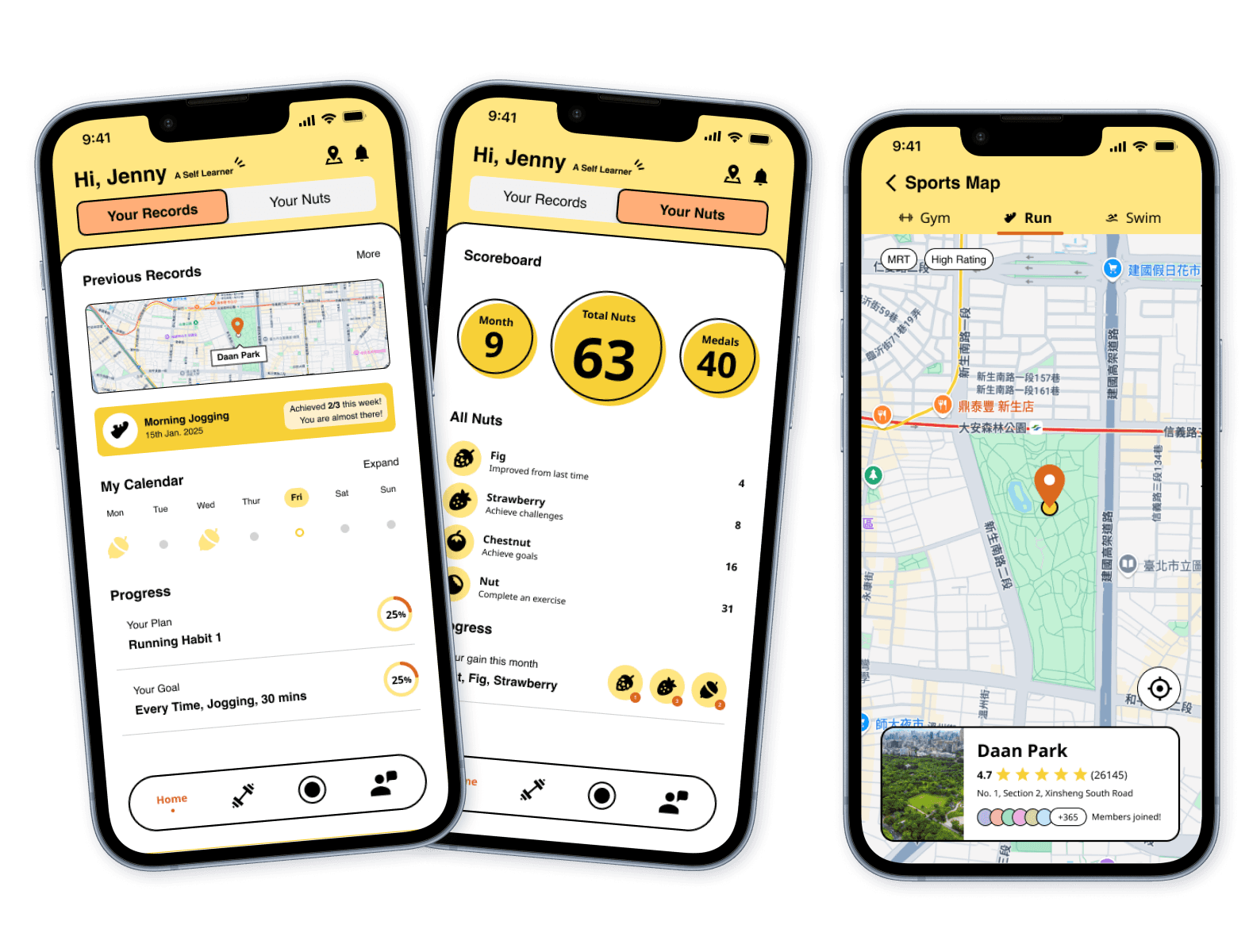
Home page is used to track user’s records and rewards. Users can view their previous exercise records, workout calendar, and their progress on the Record tab. They can also swipe right to view their rewards (Nuts) they collected after the workouts on the Your Nut tab. A special feature is the Sports Map, which gives users an overview of their nearby workout spots and studios.
Plan
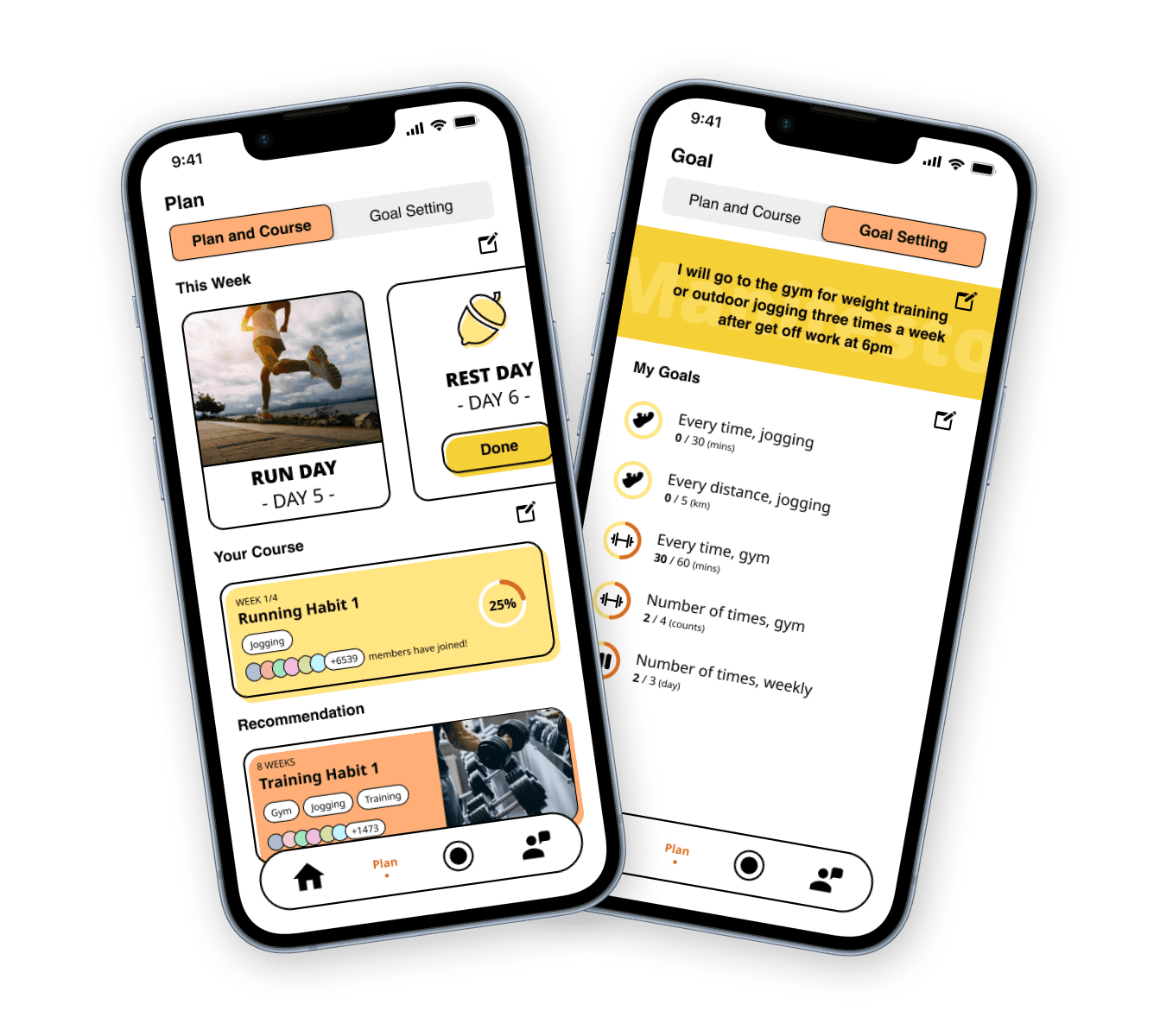
The plan page shows the user’s customized course and their goals. Users can manage their courses or challenge themselves by joining difficult courses through the Recommendation.
Record
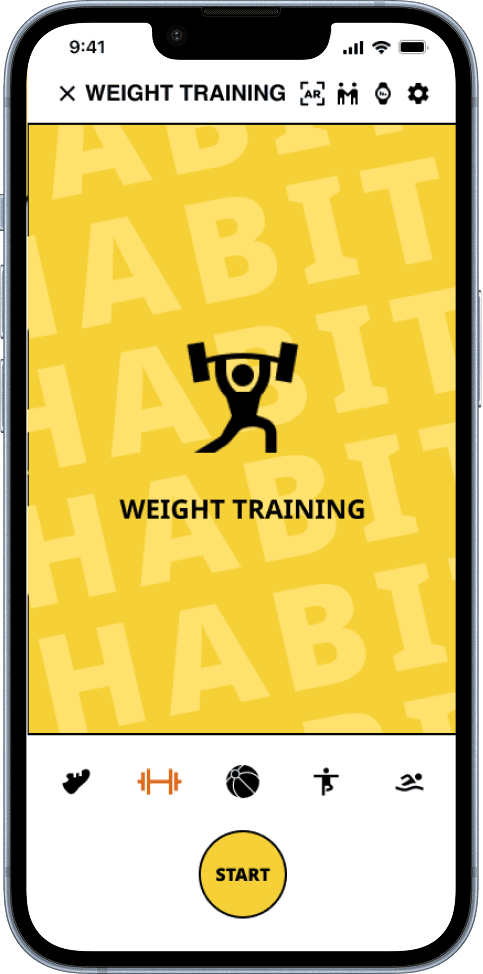
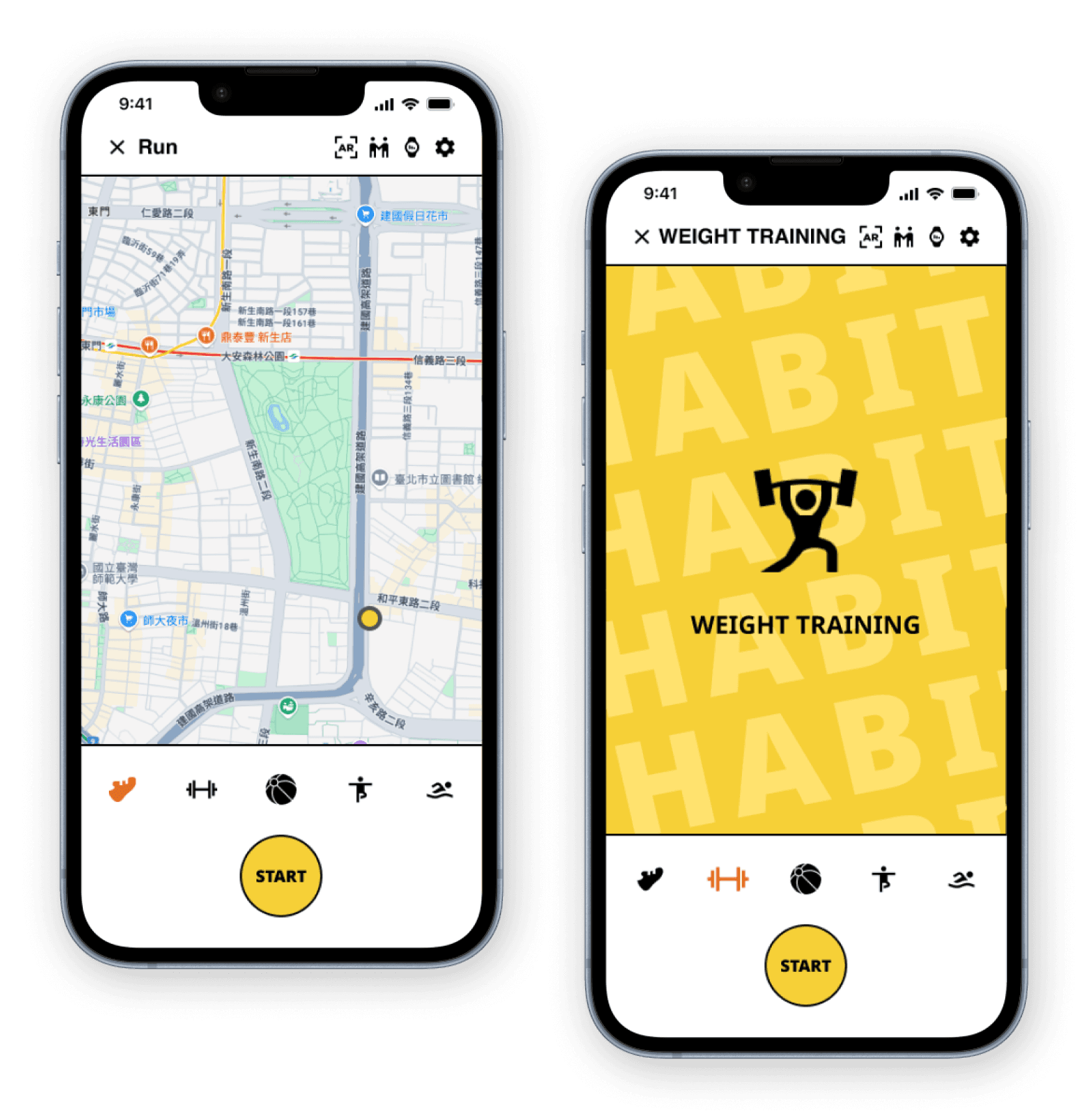
The record page is used to record the user’s exercise activities. Once the activities have been recorded, the records will be displayed in the app on all pages. The users can also connect the data with their sports watch, invite their friends to join the exercise (to gain unique rewards), and collect rewards using the AR feature.
Coach
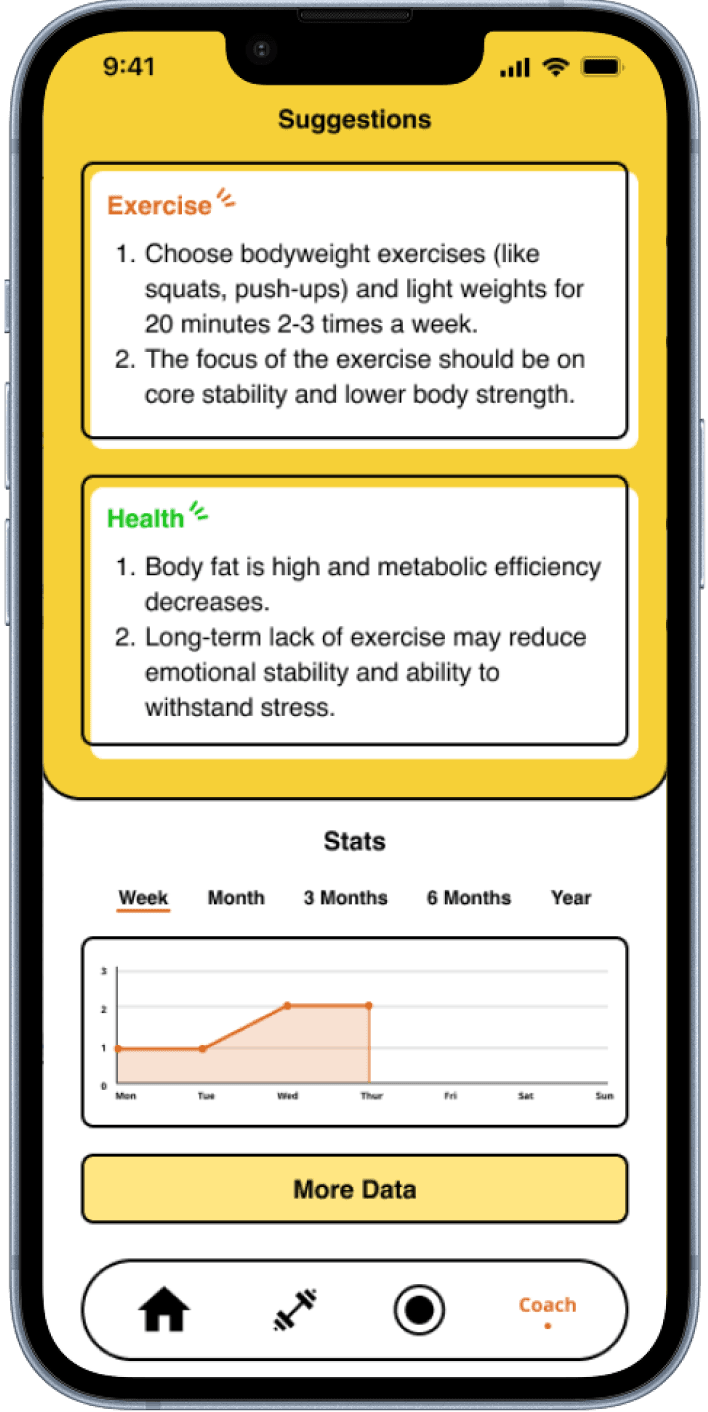
The coach page provides the suggestions and stats of the user. The suggestions are generated, and it analyzes the exercise performance and compares the previous data, which includes suggestions on exercise and health.
Reward (Nuts)
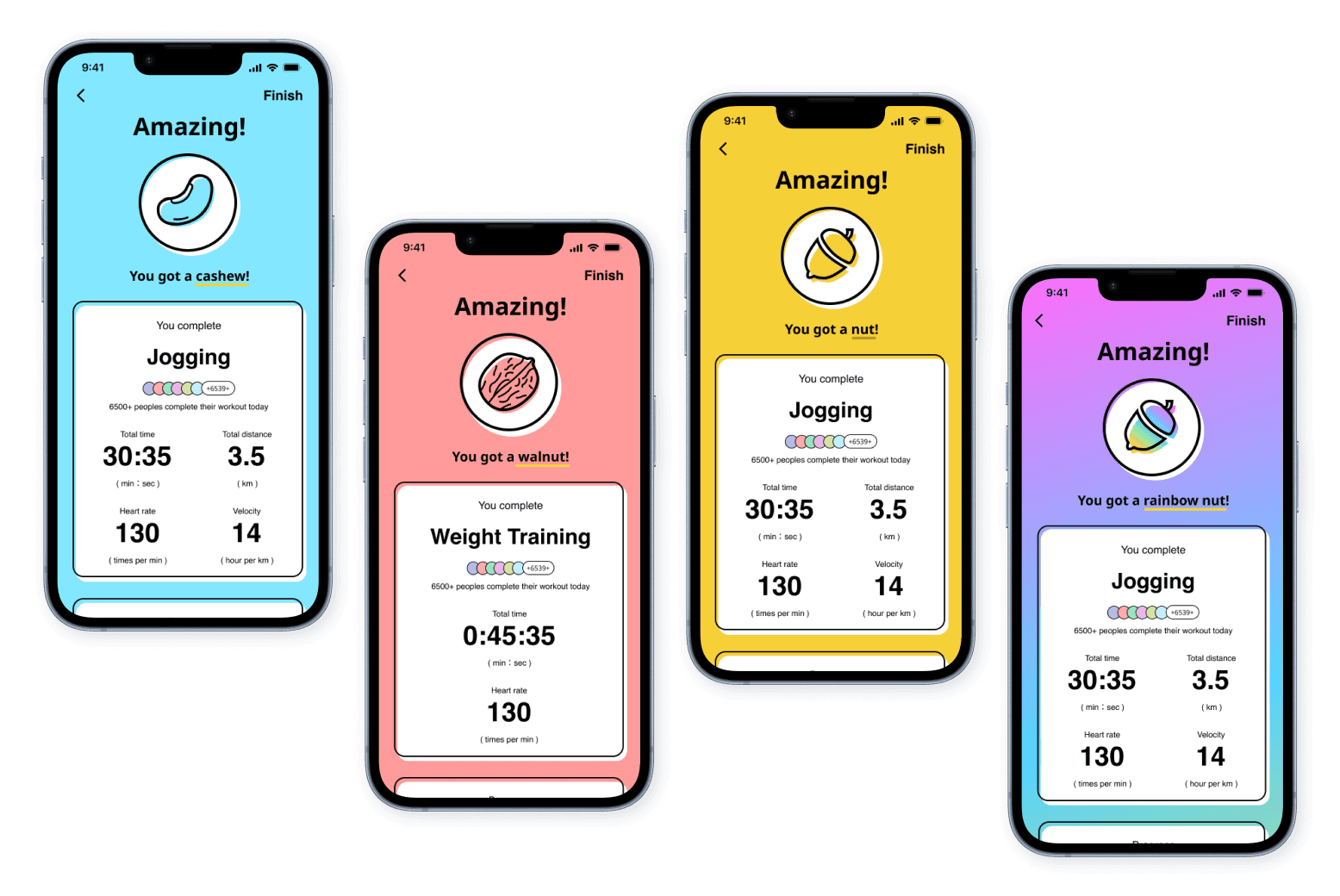
After each exercise, the user will receive a reward to motivate them. Each reward is different, depending on what the user achieved in this workout. For example, complete an exercise can get a nut, better than the last time, can get a Fig. If users connect with their friends, they will get a rare rainbow nut!
Try it yourself!
In this project, I practice the Lean UX methodology in a real case scenario. Unlike traditional UX method, which follows the double diamond design process, Lean UX emphasis each adjustment and learning in every sprint. I believe that choosing or combining the traditional UX process and the Lean UX process can help me adjust to different design teams and companies in the future as a professional designer. Having completed the NutHabit project, I had three takeaways:
Design process can be changed
A friend (senior designer) told me that every design team in their company has its design process. I understood that there is no perfect design process. As designers, we should focus more on the impact we create, not the process or tools we use.
Again, user testing is A SERIOUS THING
I have to admit that making a mid-fi prototype and using it to conduct the user testing is my pain point. Testing participants always have harsh opinions on this premature prototype if it were a launched product. I have to adjust my mind every time and trust that my participants are giving valuable feedback. No matter what, I learned that a mid-fi prototype should be taken seriously because the more complete the mid-fi prototype is, the more real, honest feedback will come from the user’s mouth.
Reference products are my new best friends
In the Lean UX process, there is a marketing analysis process to help designers identify the MVP features. I found that finding reference products is a super helpful process for not only finding potential solutions but also being treated as design references. Coming up with ideas from nowhere is hard for a less experienced designer like me, which makes the reference product valuable!
For the future plan, the app could have some upgrade features to extend the lifecycle. For example, implementing the Challenges and Events features to let users who have successfully developed an exercise habit engage more in achieving new challenges or goals using the app.
This project provides me with a chance to use the knowledge I learned from university for a real case. In the end, I want to thank my supportive friends and family who became my research participants and gave me valuable feedback.